5 stars out of 5
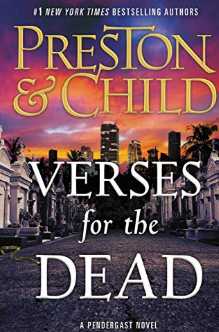
 What a joy it is to enjoy a book so much that you're sad when you reach the end! Over the years, I've become a fan of several series, including this one - never (or rarely) missing a new installment. And over those same years, I've watched way too many of them become rather stale; characters I'd come to love fall off their professional games, take on lesser roles in their own stories and even, in one instance, continue to act like a silly pre-teenager well into what should be grown-up years. Not so here; although I admit to wishing for a bit more interaction between FBI agent A.X.L. Pendergast and his ward, Constance, his remarkable sleuthing powers and clever repartee haven't faded one whit.
But while many things remain the same, others have changed; most notably, a new chief at the FBI's New York field office, who isn't pleased with Pendergast's think-outside-the-box tendencies, no matter how many cases he solves as a result. As such, he gives Pendergast an ultimatum: Henceforth, he must work with a partner. That turns out to be junior agent Coldmoon, a Native American from the Lakota tribe who's very intriguing in his own right (in fact, he's interesting enough that I can see him with a series of his own (are you listening, Messieurs Preston and Child)? For now, though, they're a dynamic duo - and watching two very capable characters who really don't want to work together work together is a treat.
As the story begins, a very fresh human heart is found in Miami on the grave of Elise Baxter, who died 11 years earlier - her death deemed suicide by hanging. A note announcing the "gift" is signed "Mister Brokenhearts," so the search begins to identify the writer as well as the former owner of the heart. When the rest of her is found, Pendergast and Coldmoon are assigned to the case (in fact, Coldmoon gets another concurrent assignment, but the nature of that one isn't for me to reveal).
The two detectives head first to Maine, where Baxter died, but clues or ties to the heart-deprived woman are nonexistent. Meanwhile, another fresh heart turns up in a mausoleum in Miami - on the container holding the remains of a woman who reportedly committed suicide in a manner eerily similar to Baxter. By this time, Pendergast's supervisor is plenty riled up, and his anger only escalates when Pendergast insists that exhumation of the long-ago suicide victims' bodies is highly advisable. Ultimately, though, he gets his way, and when an especially capable medical examiner does her thing, clues start falling into place that lead Pendergast and Coolmoon to uncharted territory and a fight to the death (who bites the dust is yet another tidbit that's for me to know and other readers to find out).
All told, it's quite an exciting adventure, and I'm sorry it's over. I have confidence that another installment is in the works, of course - but hey, fellas, could you please hurry it up just a little bit?
Verses for the Dead by Douglas Preston and Lincoln Child (Grand Central Publishing, December 2018); 353 pp.
5 stars out of 5

When I first started this, I was afraid it wasn't going to be my cup of tea despite the enticing description. Mostly, that was because each chapter is told from the perspective of a different character - a popular technique, of course, but not a favorite of mine. And because the chapters are exceptionally short, I expected the journey to be a choppy one.
But wait, there's more!
And guess what: It's all good. The plot twists held my attention every page of the way; and yes, those frequent switchbacks actually made me eager to move along as well (let's just say that while I'm disappointed that "my" NFL team didn't make the playoffs for this year's Super Bowl, it did free up more time for me to plow through the last half of this book without stopping).
Here's the scoop: Rebecca and Nicole are longtime best friends; when Nicole dies - her death ruled a suicide - Rebecca of course comes to the funeral. But she's got an even more important agenda; bolstered by messages over the past year or so from Nicole, she's convinced that she did not kill herself. Rebecca is aware, for instance, that Nicole's on-the-surface perfect second husband, Richard, has a grown daughter, Olivia, who lives with them and is at best snarky toward Nicole. As for Richard, well, let's just say blood is thicker than water. So on the pretense of looking for a new home in the U.K., Rebecca decides that the best way to see what's available - and ferret out the truth about Nicole - is to accept the handsome and charming Richard's offer to stay with him and Olivia (if you suspect something else might come of that, you'd be right - no big surprise there, for goodness sake).
In all honesty, I wasn't able to work up sympathy or empathy for a single character; I'm totally unable to identify with females who refuse to get up and run when it's clear they're being emotionally or physically abused in any way). Rather, my interest was in riding the whole thing out: What really happened to (and by) whom, and who, if anyone, "won" out. And boy, what a ride it was.
So if you're looking for an easy-to-read book of head games, don't hesitate to give this one a try. Meanwhile, thanks to the publisher, via NetGalley, for providing me with an advance copy to read and review.
The Second Wife by Sheryl Browne (Bookouture, January 2019); 349 pp.
4 stars out of 5
 A tad far-fetched plot, perhaps, but this story certainly serves up timely issues and, dare I say, is a very enjoyable entry in the Detective Alex Cross series (this is the 26th, and I've read most of them). Alex and his Washington, D.C., chief of detectives wife Bree take center stage throughout, with their kids and Alex's feisty Nana Mama mostly in the background - which is just fine with me (they're very cool characters, but I don't want them hogging the spotlight).
This one starts off with a bang - literally; a 69-year-old California senator is killed by a sniper's bullet. Bree is charged with finding the culprit - with the threat of losing her job if she fails. At the same time, a well-known assassin is spotted in the area, so the FBI and Secret Service start to dig in as well. The nation's new president - who took office when the former POTUS died of natural causes - asks Alex to get involved. Shortly thereafter, sniper killings take the lives of other government bigwigs, leading officials to suspect there's a far, far grander plan afoot. But what is it, who's behind it and how can it be thwarted?
The investigation leads Alex all over the place, and at virtually every stop he arrives at remarkably insightful conclusions while the baddies execute extraordinarily complex actions using intricate disguises to avoid capture. As this drama ensues, Alex is intrigued by a female private patient who intrigued me as well, but in the end she seemed to have no purpose other than messing with Alex's head (which I suspect will serve as fodder for another book). But the assassin chase is exciting, life-threatening and, as I mentioned earlier, timely - and readers get a bit of a surprise in the end (well, at least I did). All told, another solid entry in one of my favorite series.
Target Alex Cross by James Patterson (Little, Brown and Co., November 2019); 432 pp.
 5 stars out of 5
Did I love this book? Not even close; mesmerizing but horrified seems to be the best description as I try to compose my review. Generally speaking, it's a memoir written by a woman who grew up in remote Idaho with Mormon survivalist parents who kept their entire family isolated; she was 17 before she ever entered a formal classroom, and by the time she wrote the book, she'd been to such esteemed universities as Harvard and Cambridge and earned a Ph.D.
When I started the book - a recommendation from a journalist friend - I figured I'd be able to identify, at least somewhat. I've known a couple of folks who I'd call "survivalist" sympathizers; while they lived and worked in my real world, they espoused hatred of all things government, considered the Second Amendment a directive from God and spoke, mostly in hushed tones, of the many groups in remote parts of the country who are hunkering down, locked and loaded, waiting for the world to self-destruct.
Besides that, I can relate to not wanting to live the life of your parents; like the author, I was eager to "escape" a traditional future like that of my mother and father - okay for them, perhaps, but not what I envisioned for myself. And like her, no matter how far I've gone from home I've never escaped those down-home country roots (nor do I want to; rather, I'm quite proud of them). Like the author, I loved my parents dearly, and I always knew they loved me. But unlike her, never once did they try to dictate what I did, where my life took me or what I believed. And for the love of Heaven, never would they have harmed me mentally or physically (well, there was one time my Dad gave me a whopping knot on the head with his bat when he was the hitter and I the catcher in a farmyard baseball game, but there's no question that it was an accident even if my mother never quite forgave him for it).
So what the author lived through growing up - and I can think of no other way to describe it than as a living hell - is unimaginable to me, just as is her reluctance to leave once and for all. Or at least, it was until I read what she's written and came to at least some understanding of how she was - and to a certain extent still is - torn between loyalty and love for some pretty unlovable people and her need to reach her full potential, whatever that might be. Some parts of her story actually make sense given her parents' beliefs, such as making the kids learn Morse Code to ensure that they all could communicate "if the lines are cut." And having watched business owners bite their fingernails to the quick back in late December 1999, I understand her father's obsession with the Y2K thing (but perhaps not his despondence when nothing happened; after all, those business owners were pretty darned happy).
Other parts, though, remain almost unbelievable to me - in particular, some of the gruesome injuries that happened to her and other members of her family, none of which were treated by conventional medicine. But her remembrances were fact-checked by editors; and even if some aren't spot-on accurate, they're close enough to give me chills. All told, it's quite a story, and one that made a considerable impression on me. Highly recommended.
Educated by Tara Westover (Random House, February 2018); 336 pp.
4 stars out of 5
 In the years I've been posting book reviews online, I've read just two of the author's 18 books featuring attorney Dismas Hardy: "Poison" last year, and "Fatal" in 2017 - and loved them both. This one's very good as well, but I have to say I didn't enjoy it quite as much as the other two. I suspect it's because, as the author notes in the acknowledgements, his intent was to "tie up" loose ends from past books rather than conjure up new plots. And while I had no problem following what was happening even though some of those ends didn't ring any familiarity bells for me (another way of saying this book stands alone well), the parts related to years-earlier events just didn't seem quite as interesting to me than the current goings-on.
On the other hand, the whole gang is back together (well, except for a couple who bit the dust in previous happenings) and Dismas is trying to put the old law firm back together again. On the other side of the fence is new District Attorney, one who clearly has a beef with Dismas and his crew. Noteworthy to me, by the way, is that readers learn early on who the bad guys and gals are and what they've done - then they get to follow along as the Hardy boys and girls figure out what's going on.
At the beginning, the firm's longtime, ultra-loyal secretary, Phyllis McGowan, suddenly takes off work for several days with no explanation. When she returns, she remains tight-lipped - until, out of the blue, the police rush through the door with a warrant for her arrest in connection with the murder of a man who had made a nice living smuggling women into the United States. Needless to say, Dismas becomes her attorney of record, and he quickly learns there's much more to his secretary (and her just-out-of-prison brother) than he ever thought possible.
Making an example out of Dismas's secretary, though, is only the tip of the iceberg for the new D.A., who is determined to dig up dirt on that years-earlier case that will take down Dismas and his law partners once and for all. The ending didn't come as a total surprise to me, but it did wrap things up and clear the decks for a whole new chapter to begin next time around.
And to be sure, I'm eager to read it. Meantime, many thanks to the publisher, via NetGalley, for the opportunity to read and review this one. Good job!
The Rule of Law by John Lescroart (Atria Books, January 2019); 337 pp.
4 stars out of 5
 I've said before that while I truly enjoy this series, I never totally warmed up to the main character, detective inspector Jessica Daniel, until Book 12 (this is the 13th). In that one she won me over, and after reading this one I remain a fan. She's a tough-as-nails, no-nonsense woman whose background issues don't get in her way - well, most of the time, anyway.
As this one begins, Jessica has received an ominous phone call from her wayward young friend Rebecca ("Bex"), who had been living with Jessica but recently disappeared with no warning. Jessica leaves Manchester, where she works and lives, to try and find her on a beach some 50 miles away. There, she notices a "missing" poster showing a young girl named Katy, who bears a strong resemblance to Bex. When Jessica calls the number on the poster, the man who answers claims to be Peter, Katy's brother.
They meet in person, but Peter has no knowledge of Bex. Disappointed, Jessica returns to her rather seedy motel room and single-handedly empties the mini-bar's contents (well okay, maybe she used both hands). When she crawls out of bed - pretty thoroughly hung over - she gets a sobering wake-up call; the man she met has been murdered. Not only was she the last known person to have seen him alive, there's blood on her car that wasn't there the day before. The local police detective is willing to cut her some slack because she's "one of them," but at the same time, she's considered a prime suspect. From that point on, it's mostly Jessica trying to stay in the shaky good graces of the law despite mounting evidence of her guilt while continuing to look for Bex on her own. The journey takes her to the bowels of the city she's in - almost literally - and reveals some nasty goings-on involving drug and human trafficking.
Needless to say, Jessica lives to see another day (or more to the point, another book), although she doesn't emerge totally unscathed. Interesting to me is the author's explanation that the series has been developed to showcase "seasons" of Jessica's life; books 8-13 are Season 2, which means the next one will mark the start of Season 3. What do I say to that? Bring it on!
Silent Suspect by Kerry Wilkinson (Bookouture, January 2019); 320 pp.
5 stars out of 5

Two revelations in the interest of full disclosure: I won an advance copy of this book through BookishFirst; and, about a third of the way through, I had what turned out to be a spot-on brain niggle about how it would end (the who, not the why). That acknowledged, I'll simply say Wow! If this doesn't hit the big leagues among 2019 releases, I'll be shocked and thoroughly disappointed.
The patient, Alicia Berenson, is an intriguing character; living, if you want to call it that, in a mental health facility for the past six years or so, she was found guilty of murdering her photographer-husband Gabriel in cold blood and subsequently deemed "mad." From the time she was found standing near his just-killed body, she has never uttered a single word. Enter forensic psychotherapist Theo Faber, who has learned about the case and is so intent on "healing" her that he leaves his job at a successful clinic to join the financially shaky Grove, where Alicia is an over-medicated resident. Through chapter shifts, readers get information on Alicia's childhood, her work as a painter, her marriage and their family and friends. Interspersed are excerpts from a diary she's been writing in secret. Among the revelations? A strange man may have been stalking her.
But the bottom line is that for the real story to be known - or at least Alicia's version of it - she must find and use her voice. That's been Theo's goal from the beginning, but he has to fight not only the facility's higher-ups - most of whom have been treating and working with Alicia for years and have concluded that she's incurable - but also a very determined-to-remain-silent patient.
All that happens from that point on makes for great reading - and a book I highly recommend to anyone who loves psychological thrillers. Thanks again to the publisher for the opportunity to read and review it.
The Silent Patient by Alex Michaelides (Celadon Books, February 2019); 336 pp.
 What a joy it is to enjoy a book so much that you're sad when you reach the end! Over the years, I've become a fan of several series, including this one - never (or rarely) missing a new installment. And over those same years, I've watched way too many of them become rather stale; characters I'd come to love fall off their professional games, take on lesser roles in their own stories and even, in one instance, continue to act like a silly pre-teenager well into what should be grown-up years. Not so here; although I admit to wishing for a bit more interaction between FBI agent A.X.L. Pendergast and his ward, Constance, his remarkable sleuthing powers and clever repartee haven't faded one whit.


