4 stars out of 5
 This debut novel initially got my attention in part because the main character, Julia Gooden, is a crime reporter at a Detroit newspaper. Although I rarely found myself on the crime beat (except perhaps following up on an errant local politician), I spent much of my career as a journalist/newspaper editor. Besides that, the place I hail from, like Detroit, has suffered the effects of a failing industrial base. Add that to an intriguing description, and I was doubly delighted to receive an advance copy from the author and publisher (via NetGalley) in exchange for an unbiased review.
During her early years, Julia and her two-years-older brother Ben were dirt poor, living in a seedy part of town. Their only joy, it seemed, came from occasional visits to a local amusement park; when anything came close to threatening Julia, Ben intervened and promised to protect her forever. But one night when he was nine, he was abducted from the bedroom they shared, never to be seen or heard from again. Julia remembers almost nothing about the night of his disappearance, and she carries the devastation she feels over to her current life as a reporter with two young sons, of whom she's overly protective (to put it mildly). Her husband has walked out largely because of the lengths to which she'll go to keep them safe. That's because, she says, she's afraid that even now - 30 years later - whoever took her brother will come back to get her sons.
And as bad luck would have it, her greatest fear comes true; her two-year-old son Will is taken from his bed. Needless to say, Julia is devastated; at the same time, she suspects the two kidnappings are related - and she sets out to prove it. She's gets some help from the local police - most notably from a detective with whom she had a pre-marriage fling back when he worked on the case of her missing brother. But even though he tends to agree there's a possible connection, few clues turn up that could lead to finding the culprit in either disappearance. Julia, however, is determined to do whatever it takes to get to the truth and, first and foremost, find her son alive ("This time I'm not the one who's chasing the story. It's the story that's chasing me," she says).
It's a story that hooked me right from the start as well. The writing is outstanding, the characters are well developed, and the excitement kept building to the point that I couldn't wait to get to the end. But just as I got there, I got hit with a sucker-punch. I liken the feeling to watching a baseball as it heads toward the fence for a sure-fire home run; as I'm halfway out of my seat to cheer wildly, it swerves to the left and goes foul.
Exactly why that happened I can't explain without spoiling things for other readers (and I hasten to add that I expect many of them to disagree with my assessment anyway). What I can say is that the way the "holes" in Julia's memory bank are filled in with regard to the night her brother disappeared, coupled with physical feats that far exceed human capability, left me shaking my head. My disappointment was greater, I'm sure, because I so much enjoyed the rest of the book.
And despite my misgivings about the ending, I still recommend it. As I said before, not everyone will share my opinion (if you read it, which I hope you do, you'll understand why).
The Last Time She Saw Him by Jane Haseldine (Kensington, June 2016); 368 pp.
 5 stars out of 5
"It is quite true what philosophy says, that life must be understood backwards." --Kierkegaard
That quote certainly rings true of this book which, except for an introduction and an epilogue, is written backwards. It's a technique I've encountered only once before, in The October List by Jeffery Deaver (Grand Central Publishing, 2013). That one impressed the hell out of me, and I'm delighted to say this one did the same. The writing is outstanding, even more so, in my mind, at least, considering the difficulty of telling a story from conclusion to beginning.
I'll also note, though, that it's a little bit more difficult for the reader as well; most likely because of our being accustomed to the standard progression in the books we read, it just seems harder to remember what happened after when you're in the middle of the before (if that makes any sense at all). Bottom line is that somewhere in the middle the thought occurred to me that the easiest way to read this one is in one sitting - but then again, I'm old and my short-term memory is, shall we say, errs on the side of "Hey, honey, why did I just walk into the kitchen?"
Nicolette Farrell left relatively secluded Cooley Ridge not long after her best friend, Corinne, went missing (now, a decade later, she's never been found). Leaving her Philadelphia attorney fiance Elliott, Nic returns "home" to look after her dementia-sidelined father, only to find that her roots have sprouted - and some have grown in directions she's reluctant to follow. She once again touches base with her brother Daniel, with whom she has a volatile relationship, to say the least; his very pregnant wife, Laura, her back-in-the-day boyfriend Tyler - who's now dating Annaleise Carter - and Corinne's former boyfriend Jackson. Nicolette is there only a few days before Annaleise goes missing as well.
That's when the story starts winding counter-clockwise, starting with Day 15, the day Annaleise disappears. From then on, each backward-looking chapter peels back another layer of information that leads to the disturbing truth. That also marks the end of story details for this review, because anything else would reveal way too much. My advice? Read it for yourself - I don't think you'll be sorry. As for me, all I can say is thank you to the publisher and author for giving me the privilege of reading an advance copy in exchange for a review.
Oh yes, and one other thing: Wow!
All the Missing Girls by Megan Miranda (Simon & Schuster, June 2016); 384 pp.
 When I started reading this, the third and final book in the trilogy that started with the horrific mass murder in Mr. Mercedes, I started conjuring up possible endings. By about halfway through, I'd narrowed them down to the one with the most macabre twist, trying, I suppose, to get one up on the author, who's the master of grisly and ghastly. Had I bet money, though, I'd have lost; I won't exactly call it a happy ending, but it's a fitting conclusion and one that won't keep me up at night.
Wish I could say the same for the rest of the book.
This one begins as Brady Hartsfield, the killer who kicked off the trilogy by driving a Mercedes into a crowd, is in his fifth year at a brain injury clinic. He's in a vegetative state from which he's not expected to recover. But is it possible there's an active brain behind his blank stare? Well of course, silly - this is a Stephen King novel. In fact, Hartsfield has acquired powers that make him incredibly dangerous even from a wheelchair in a locked hospital room.
Retired detective Bill Hodges's partner Holly Gibney messed up Hartsfield's brain in the second book, Finders Keepers, with mighty whack to his head. Hodges, though, has believed almost from the first day of the hospital confinement that Hartsfield is "in there" - faking it to avoid being declared competent to stand trial. For a long time, he visited the killer, taunting him and hoping for some kind of reaction. Finally, he gave up, staying busy with his investigation firm. But now, he and Holly are called to the scene of a suicide - and it turns out the victim had ties to the Mercedes Massacre six years earlier.
Convinced that Hartsfield is somehow bringing diabolical plans to life from his hospital room, Hodges, Gibney and their young friends Jerome Robinson and his teenage sister Barbara set out to deduce how he's doing it (no one in the police department believes Hartsfield is capable of anything except drooling, so they're unwilling to help). What Hodges and Gibney learn stretches the limits of credulity, I admit - but it's also scary as all get-out (hey, didn't I mention this is a Stephen King novel)?
This book stands on its own, I think, but I'm sure I got more out of it because I'd read the other two and highly recommend that approach to others. Just like this book, both of those earned high marks from me.
End of Watch by Stephen King (Scribner, June 2016); 448 pp.
4.5 stars out of 5
 After seeing quite a few rave reviews of this book from friends at Goodreads.com, I decided to give it a go myself. But then other books came along, and I pretty much forgot about it until recently. Now that I've finished it, I'm a little annoyed with myself for putting it off for so long. On the plus side, the next in the author's series featuring detective Erika Foster - The Night Stalker - was released earlier this month, and I don't plan to let grass grow under my feet the second time around.
After reading just a few pages of this one, I learned two things: First, it would be a good old-fashioned, hard-boiled detective novel, and second, the author would not (to my great relief) shift chapters from past to present as seems to be the trend du jour among novelists in this genre. The story itself got my attention from the git-go as well: the body of a young woman is found under the ice in a South London pond. Erika, who is still mourning the death of her policeman husband and chastising herself over her actions that possibly caused it, is brought in to help find the killer of the girl in the ice because of her expertise in solving murders.
Of course, nothing comes easy; in part, the investigation is impeded at every turn by the father of the dead girl - a wealthy businessman who rubs elbows with Labour Party heavyweights and looks down on people with Slovak heritages like Erika. Then, three similar murder cases surface - prior killings of three female prostitutes. Adding more fuel to the investigative fire, the sleazy woman Erika cajoled into snitching about a suspect turns up dead as well. By now, Erika is convinced they're all connected. As the investigation proceeds, run-ins with the victim's influential family get Erika kicked off the case; but Erika - a strong woman who won't take no for an answer when she believes she's right - keeps poking around in places her boss doesn't want her to go and suddenly finds herself put on leave.
That brings up another point: All the characters here are well developed, especially Erika. But did I like her? Well, not all that much; she's been around the block more than once and is tough as nails, but her pushiness, especially with her boss, made me pretty sure we'd probably never be close personal friends. Still, she's intriguing - and definitely a good detective - so whether we'd ever share tea and crumpets really doesn't matter a whit. That said, I admit to being a little surprised at how quickly she - clearly an outsider - is accepted by the team she was brought in to oversee.
It wasn't a surprise, though, that being on leave doesn't stop her for long; even though she has no official authority, she keeps digging (with some unofficial help from her team). But the more she learns, the more she angers the killer - who then decides to add the detective to his or her hit list. The game is on; will Erika nail down the killer before the killer nails her?
Since we all know there's a sequel featuring the good detective, I'm not spoiling anything by saying that she lives to see another book. But what she goes through to get to the end of this one (some of which made me ponder just how much abuse a body can take before giving out) kept me turning the pages as fast as I could. And for those who care about such things, no, I did not guess the killer's identity until the author wanted me to.
All told, it's a very enjoyable police procedural. Now I'm off to get my hands on the next installment.
The Girl in the Ice by Robert Bryndza (Bookouture, February 2016); 396 pp.
4 stars out of 5
 Talk about dysfunctional people! Not a character here - with the exception of an infant - is without flaws, most of them dead serious. And now that I think about it, I'm far from sure that baby girl will turn out okay.
Central to this psychological drama are one-time "friends" Edie and Heather; the former is beautiful and popular, the latter, not so much. As the story begins, they've long since gone their separate ways; Edie - now in her mid-30s - is living alone, working as a waitress and pregnant. The father isn't in the picture at all, and after daughter Maya is born, Edie just can't handle dealing with her.
Enter Heather, who suspiciously appears at Edie's door at the perfect moment. No, Edie isn't happy to see her - their parting of the ways years earlier was, to put it mildly, less than pleasant. Edie is so emotionally fragile, though, that she comes to accept the help that Heather seems to give willingly. But as readers might suspect, it's much more complicated.
Chapters shift back and forth from the present to the days of their friendship. I'm not always a fan of that technique (one that's fast becoming overused, IMHO), but it works perfectly here as the author slowly and tantalizingly reveals details of Heather and Edie's roller-coaster relationship and the roles their families played in the whole scenario. I was chomping at the bit, for instance, to find out more about Heather's little sister and the get the nitty gritty on the quarry incident that caused the rift (make that a chasm) between the two girls. By the end, of course, I learned just about everything that happened back then - and none of it is pretty.
But that end - which, at 304 pages, came quickly - turned out to be not quite everything for me. Although the story is so engrossing that I had a tough time putting it down, I was left with a few niggling questions (none of which I can mention here without spoiling things for other readers). One or two I can chalk up to the story's taking place in England, where particular situations may be quite different from here in the US of A; but others left me scratching my head (hence 4 stars instead of 5). Still, this is a book well worth reading, and I thank the author and publisher, via NetGalley, for the opportunity to read an advance copy in exchange for an honest review.
Watching Edie by Camilla Way (NAL, August 2016); 304 pp.
4 stars out of 5

This highly entertaining book, written by the veterinarian owner of a multi-species practice in tiny Lamesa, Texas, roped me in right from the start. What's not to love about a Papaw who calls his grandson (the author) Turdhead?
The rest of the book, a compilation of the author's experiences at his veterinary practice, never loses that initial entertainment factor. A few stories are poignant, and a few are laugh-out-loud funny. Take, for instance, the unsuspecting Beagle who fell asleep on his back in the yard on a very sunny day and sunburned body parts that normally live in the shadows. I mean, goodness, gracious....
Because this is far from my usual reading genre of mysteries and thrillers, a bit of an explanation is in order. First, I spent all my formative years on a small farm (riding a school bus on dirt roads, 4-H, and all else that goes along with country life). Second, my husband and I often watch the reality TV shows featuring usually quirky veterinarians.
And last, but hardly least, one of our good friends is a vet in rural Hillsboro, Ohio, and he, too, penned an amusing book about his experiences (No Dogs in Heaven? Scenes from the Life of a Country Veterinarian by Dr. Robert T. Sharp, 2005). So when I was offered the opportunity to read an advance copy in exchange for a review, saying yes was a no-brainer.
Just for the record, this is not the book's first printing; the first, published in 2014, is said to have ranked as high as No. 5 on the Amazon Best Selling Humor List. Now that I've finished it, that comes as no surprise; if you're an animal lover - or just someone who enjoys "down home" reminiscing about real situations and real people - I'm sure you'll find it well worth reading. I know I did.
I must say, though, that in spots the book leans toward being a little too "folksy." Yes, I get that this is West Texas farm country; my point is that occasional corn-pone words like "fella" just stuck out like a prolapse amid the author's otherwise very articulate descriptions. Then too, like one of those angry bovines, the stories jump all over the pen, so a little more order (chronological, perhaps?) might be, well, in order. But lest there be any misunderstanding, I reiterate my opinion that this is a very enjoyable book. Try it - I think you'll like it too!
Crowded in the Middle of Nowhere: Tales of Humor and Healing from Rural America by Dr. Bo Brock (Greenleaf Book Group Press 2016); 206 pp.
4 stars out of 5
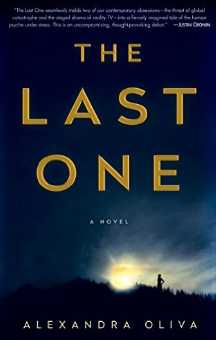
 Whether or not the author intended it, anyone reading this book who is at all familiar with the popular CBS TV show "Survivor" is bound to see the similarities. A dozen contestants in a TV show titled "In the Dark" are stranded in the wilderness (albeit accompanied by cameramen, a host and "experts" who make occasional surreptitious appearances). As in "Survivor," these contestants face arduous physical and mental challenges - both team and individual - in an attempt to earn rewards and move on toward the winner-takes-all ending. Readers get to know the each contestant backwards, forwards and sideways so they can cheer on their favorites and form opinions as to who will take home the big prize.
Each contestant here gets a nickname as well; for instance, Waitress has that job in real life, and Zoo works with animals. The girl named Zoo (yes, the Johnny Cash song, "A Boy Named Sue," inexplicably popped into my mind every time I read her name) is established early on as the main character; chapters switch back and forth from the group's activities during filming to those focusing on her alone. For the record, she's not a girl, but rather a grown woman who left her husband to test her mettle before settling down in hopes of getting pregnant - never realizing just how challenging the "game" will be. There's a code phrase contestants can say if and when they want out; but even though she considers that option when the going gets exceptionally tough, Zoo vows to forge ahead no matter what.
But then, the game seems to take on a new and different life of its own, moving away from supervised chaos to something far more sinister. Now in the middle of the wilderness - exhausted, hungry and apparently all alone - it's almost impossible for Zoo to discern what's real and what isn't. But her ability to tell the difference may well determine whether she lives or dies.
This is a well-written, very engaging book, although I admit to getting bogged down around the halfway point. That, I believe, is a direct result of the inevitable comparison with the TV show. You see, my husband and I were faithful "Survivor" viewers for the first couple of seasons. After that, it was same old, same old, so we'd just watch the first couple of episodes to see who was who, and then skip to the final show to learn who won (in fact, we do exactly the same with other contest reality shows like "Dancing With the Stars" and "American Idol" and, for that matter, NBA games). So once I was familiar with the characters here, I wasn't surprised when I suddenly wanted to flip to the end.
But happily, I fought the urge, because not long thereafter the scenes began to morph into a different and in many ways more compelling story. The journey through the final days was a bit more rushed than I'd have liked (but on the other hand, the ending hinted at the possibility of a sequel). But all told, this is an outstanding effort, especially for a debut novel - and I expect it will do very well. Many thanks to the publisher and author, via NetGalley, for the opportunity to read an advance copy in exchange for a review.
The Last One by Alexandra Oliva (Ballantine Books, July 2016); 304 pp.)
 This debut novel initially got my attention in part because the main character, Julia Gooden, is a crime reporter at a Detroit newspaper. Although I rarely found myself on the crime beat (except perhaps following up on an errant local politician), I spent much of my career as a journalist/newspaper editor. Besides that, the place I hail from, like Detroit, has suffered the effects of a failing industrial base. Add that to an intriguing description, and I was doubly delighted to receive an advance copy from the author and publisher (via NetGalley) in exchange for an unbiased review.